I was moving through Bali slowly — one region at a time, roughly a week in each place. Before this, I'd been part of the Bali Battleground competition, a fun and slightly chaotic event that raised money for kids in Bali who need better access to education. After that kind of energy, I wanted something slower. I ended up in Tabanan.
I found a retreat almost by accident — the kind of place with bamboo huts, a yoga shala, singing bowls left on the porch, and a garden that smelled like nothing I could name. It was exactly what I didn't know I needed. And one afternoon, the retreat was offering a coconut oil making activity, traditional style. I signed up without thinking too hard about it.
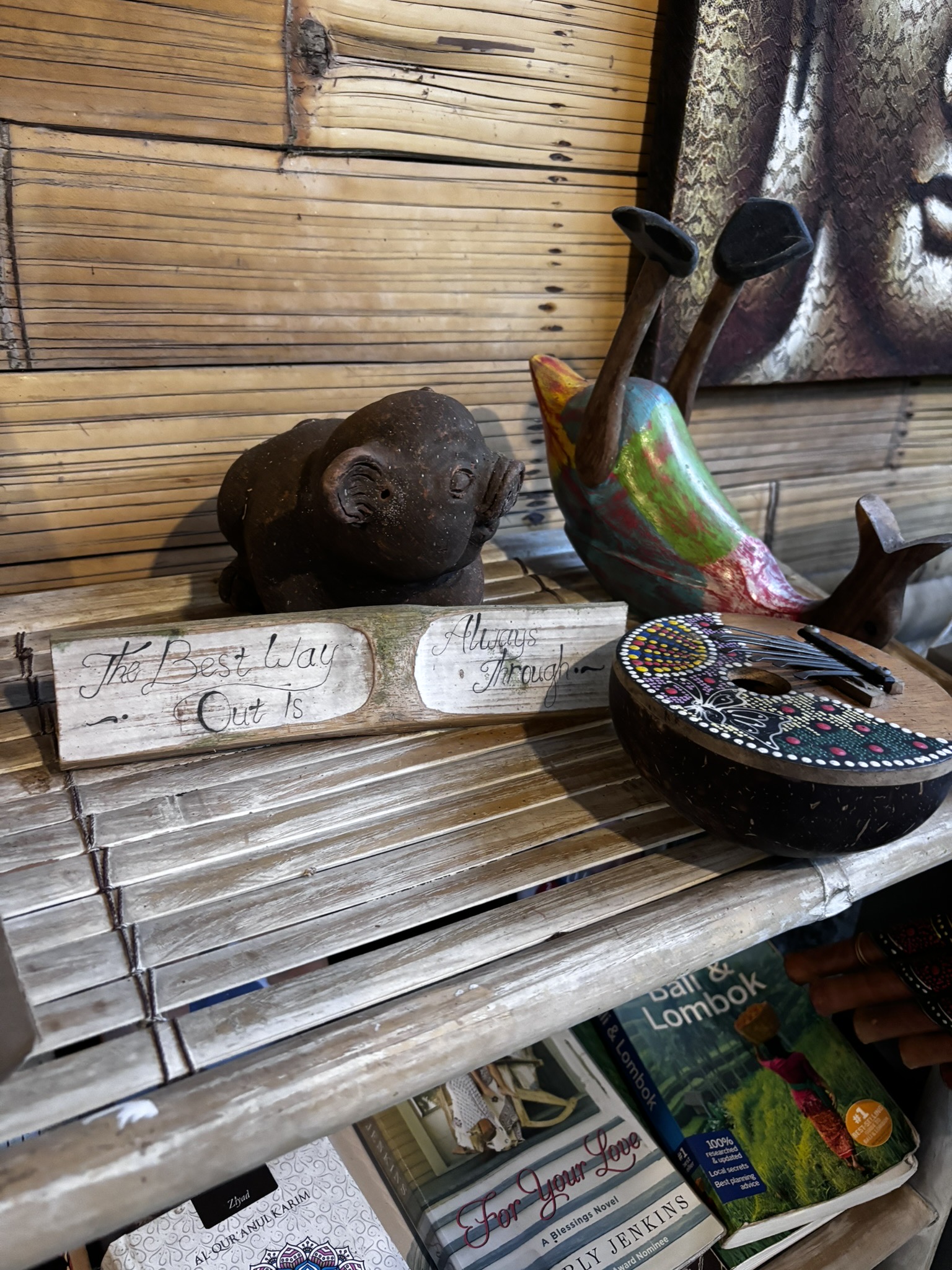
Spotted somewhere around the retreat. Felt right at the time. Still does.
Making coconut oil the traditional way
There was music playing softly in the background. A small group of us sat together, each working on our own bottle of oil. The locals leading the activity had been doing this their whole lives — you could tell by the way their hands moved. Efficient, unhurried, completely natural. The rest of us were somewhere between curious and completely lost, which is the right state to be in when learning something real.

Breaking down the coconut — methodical, practiced, no wasted movement.
The process starts with cracking the shell and scraping the white flesh out into a bowl. That part alone took longer than expected and required more force than it looks like it should. Then comes the squeezing — you take handfuls of grated coconut and press the milk out with your bare hands, over and over, until the bowl fills up. It is tedious in the best possible way. The kind of tedious that empties your head completely.
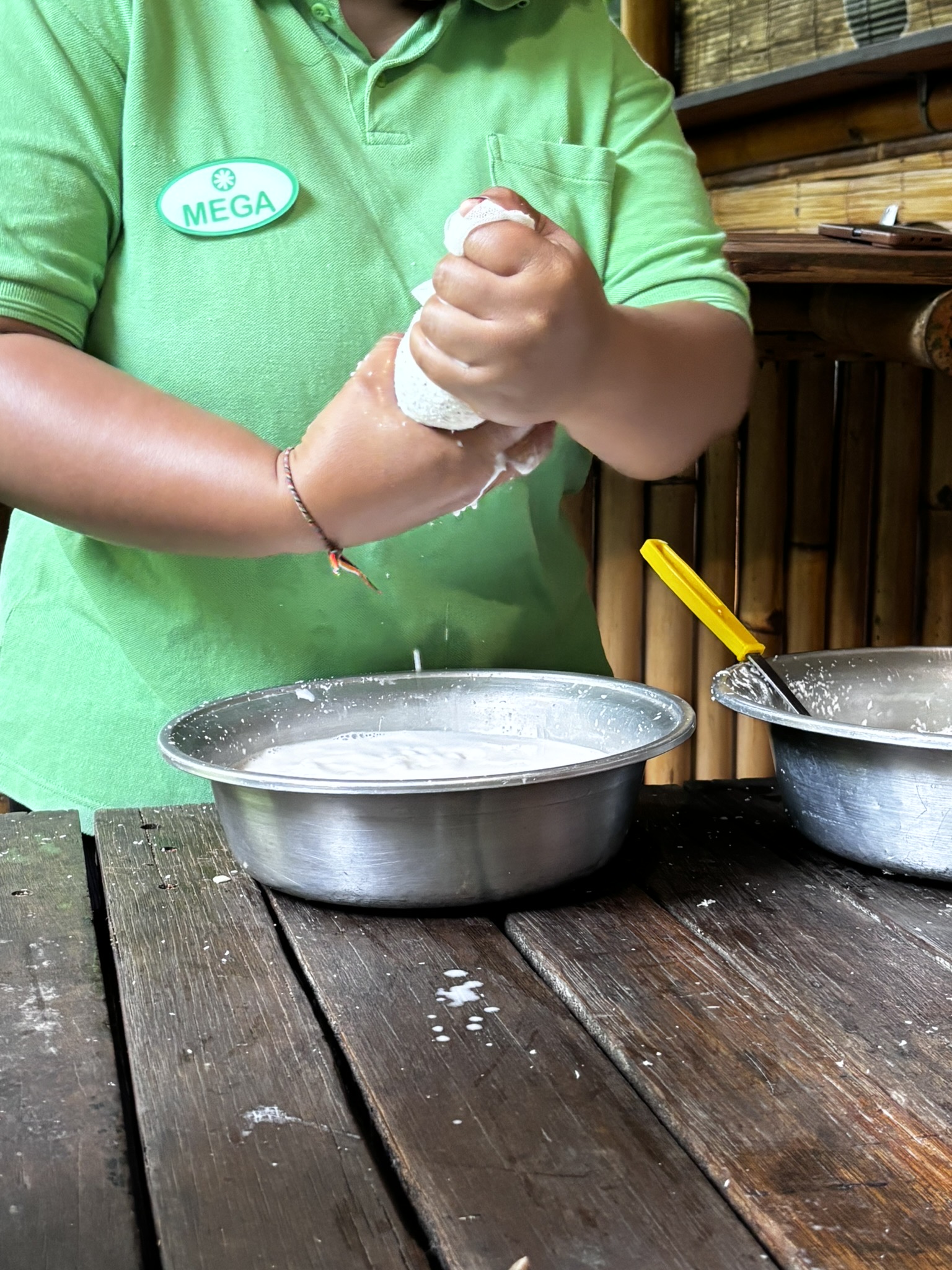
Squeezing the milk out by hand — the slow, repetitive part that turns out to be the most satisfying.
What struck me most was how mindful the whole thing felt — not in a performed wellness way, but genuinely. The music, the repetition, the smell, the small conversations happening around the table. Nobody was looking at their phone. Everyone was just doing the thing in front of them. I left with a small bottle of oil I'd made myself and felt disproportionately proud of it.
The banana leaf fence
Later that day I was wandering through the retreat garden when I came across one of the gardeners working on a fence. Not a gardener I'd been introduced to, not an organised activity — just a man doing his job, building a fence from banana leaves the traditional way.
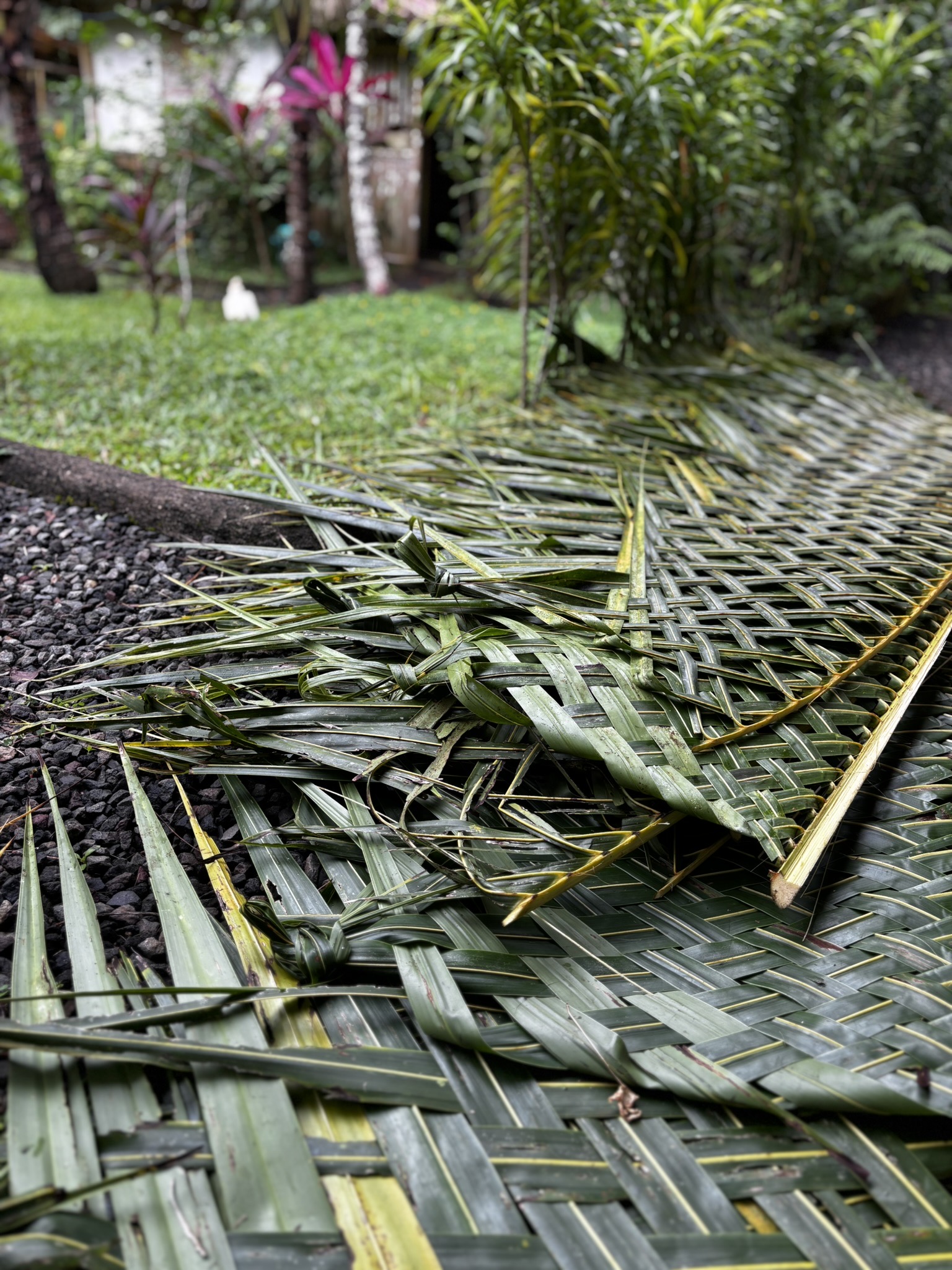
The banana leaf panel taking shape. Tighter and more precise than it looks from a distance.
He noticed me watching and, without much fuss, started showing me how it's done — splitting the leaves into strips, weaving them over and under in a pattern that looks simple until you try to do it yourself. I joined in. We didn't share a language exactly, but we shared the fence. There's something about that kind of exchange that stays with you — someone inviting you into what they're doing, no agenda, just an open gesture.
Making something with your hands alongside a stranger in a garden in Bali is, I'd argue, more Bali than most things you could book in advance.
The flowers on the way back
Walking back through the garden afterwards, I stopped for the frangipani. You always stop for the frangipani. Your feet just slow down on their own.
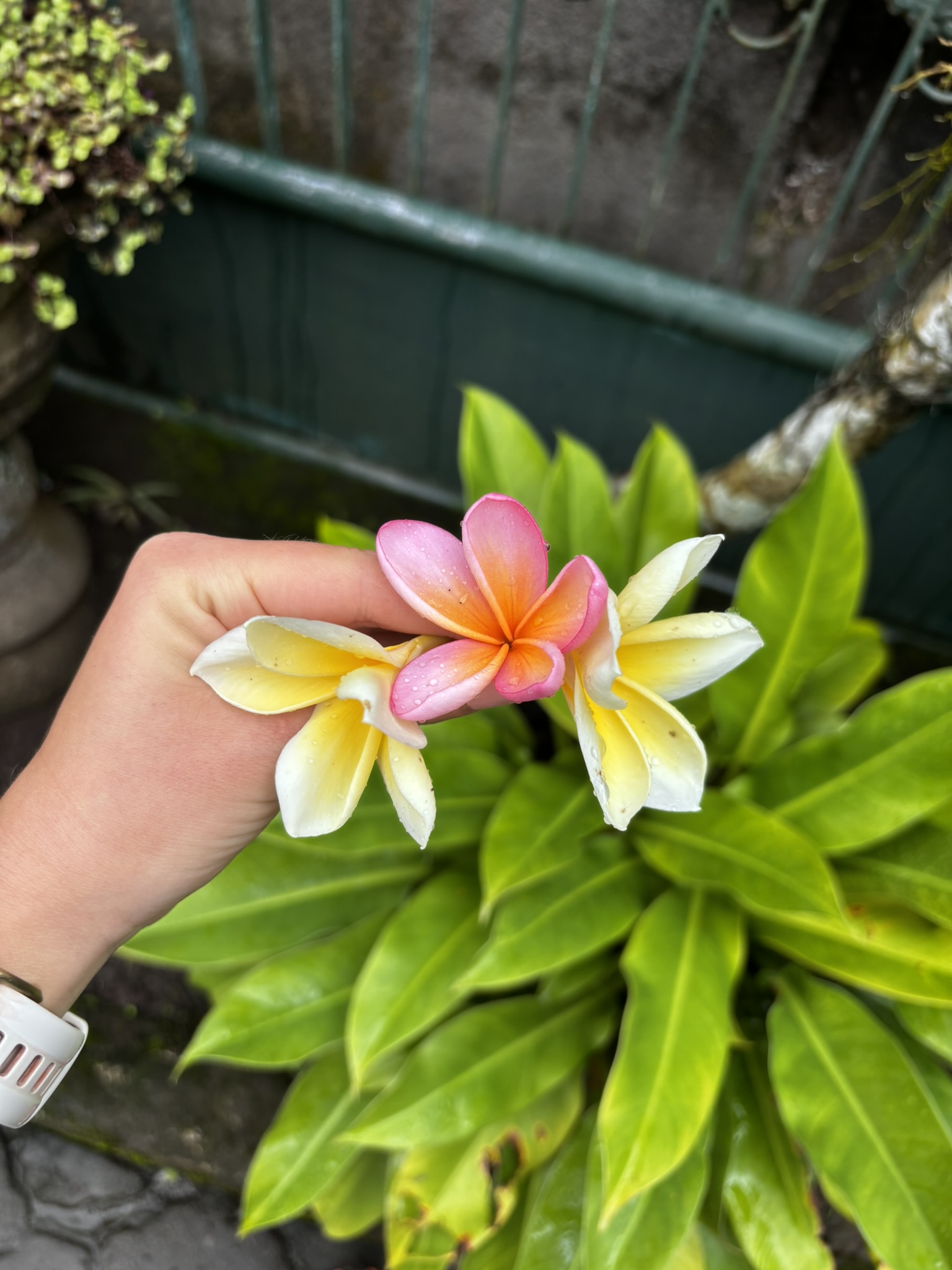
Two frangipani from the retreat garden. The pink one made me look twice.
It had been a good day. Not dramatic, not particularly photogenic in a headline way. Just a day where I made something, learned something, talked to someone, and walked through a garden that smelled incredible. Tabanan didn't make it onto most Bali itineraries I'd seen. I think that's exactly why it was right.