I arrived in Vietnam just before Christmas. My project had ended about a month earlier, and I'd seen it coming — so instead of scrambling, I'd prepared for the gap. Mid-December to mid-January is dead for finding work anyway: everyone's on holiday, decisions get pushed to January, nobody's hiring in a hurry. I knew this, I planned around it, and I went to Vietnam.
Not to work. Just to travel. Three weeks with a backpack and very little agenda.
Ho Chi Minh City: controlled chaos
I started in the south because December and January are not the right time to be in North Vietnam — the weather turns cold and rainy, which isn't what you're there for. Ho Chi Minh City was the plan, and Ho Chi Minh City delivered something I was not fully prepared for even having been in Bali and Tenerife by that point.
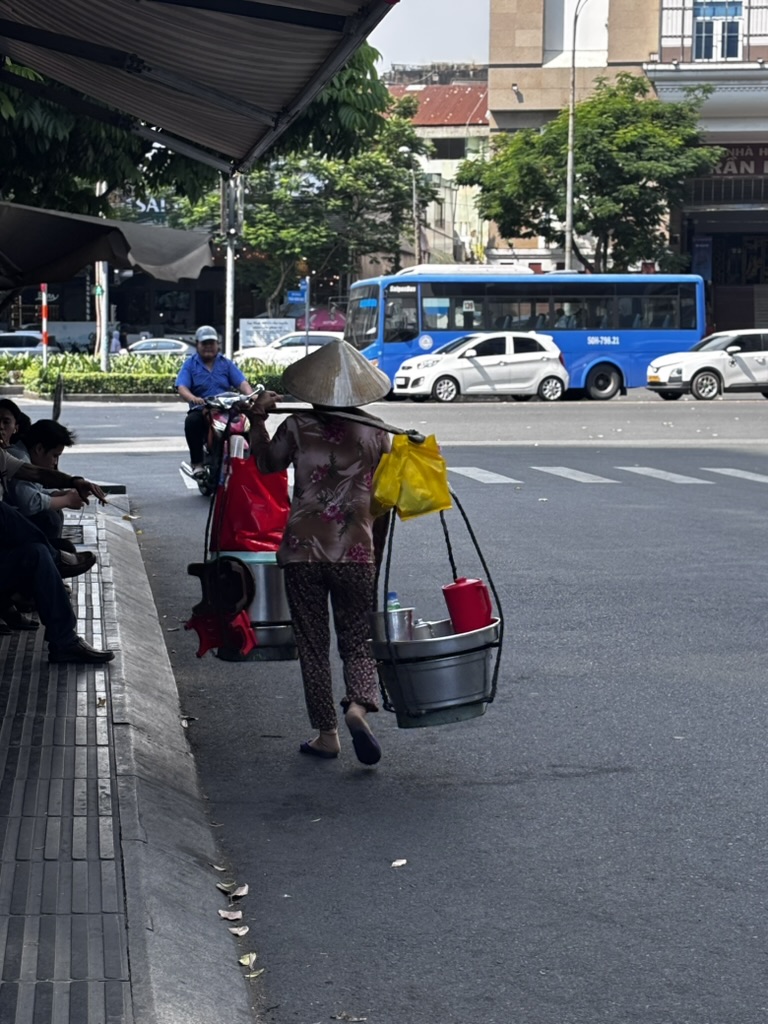
Daily life in HCMC, mid-stride. The city doesn't pause — not at 7am, not at midnight.
HCMC is tens of things happening in a ten-metre square. Scooters over scooters over scooters, the rain coming sideways, the smells of food and exhaust and incense all at once. At some point I stopped wearing shoes on the streets because it genuinely didn't make sense — everything was wet, the pavements were uneven, and the locals clearly had a different relationship with footwear than I'd grown up with. Barefoot on a scooter, barefoot on the pavement. You adapt faster than you think you will.
It was overwhelming in a way I loved and occasionally needed a break from. The city doesn't give you space to think — it just pulls you along with it.
The food (there is no food problem)
Vietnam is the most affordable country I've been to. Food especially. The question is never where to find something good — it's which of the twelve good options on this block you feel like today.
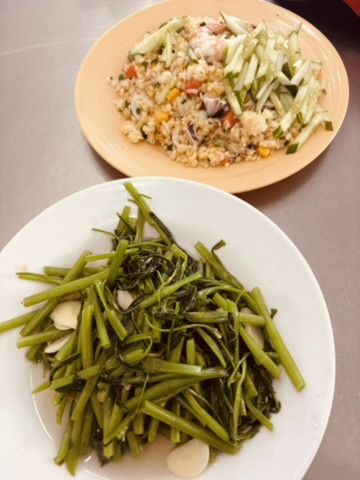
Morning glory with garlic. The dish I ordered so often it stopped being a choice and became a reflex.
Morning glory — rau muống — became my default within the first few days. Water spinach, stir-fried over a high flame with garlic and sometimes chilli, a pile of it for roughly a dollar. I ate it constantly. The fried rice next to it in that photo: also under two dollars, also excellent. After a week of this, paying €14 for pasta in a European city stops feeling like a normal transaction.
The fruit market obsession
I turned into an old lady at the markets. Every day, wandering through the fruit and vegetable stalls, picking up things I didn't fully recognise, buying them anyway. Durian, mangosteen, soursop, three varieties of mango, things I couldn't name but bought because they were beautiful or cheap or both.
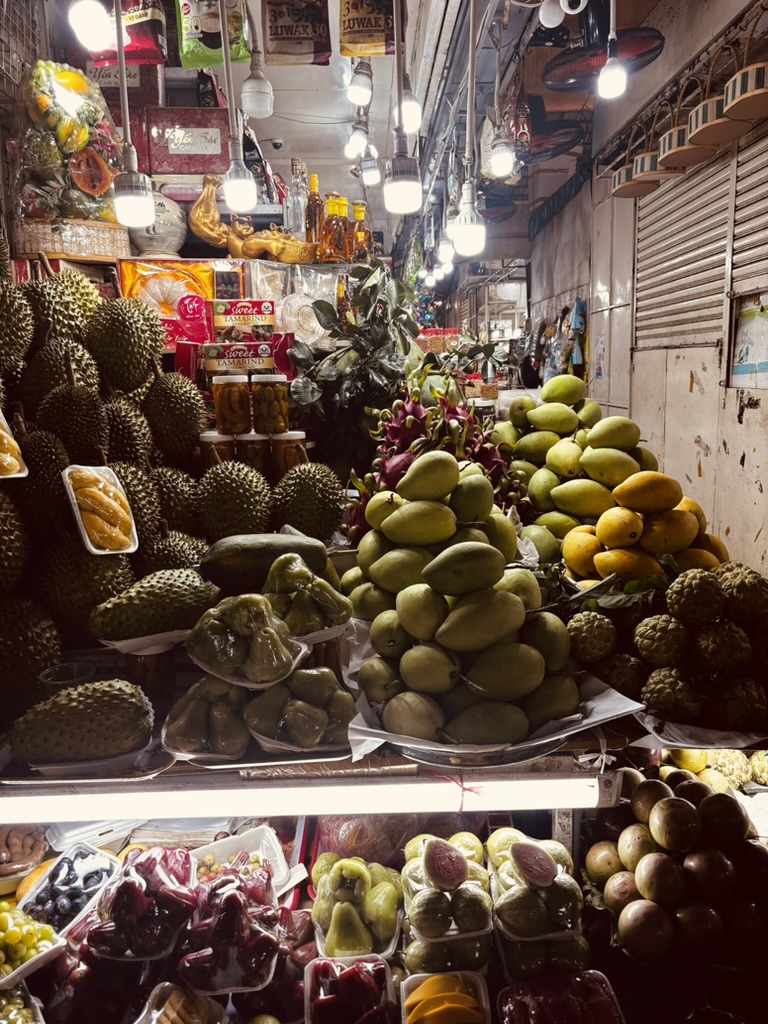
The night market. Every fruit you've heard of and several you haven't, all in the same arm's reach.
I suffered a little not having a kitchen. I missed cooking — the process of it, deciding what to make, doing something with my hands. The markets made it worse in a good way: all this incredible produce and no way to do anything with it except eat it standing up. I managed. I ate well. But I kept thinking about what I'd make if I had a kitchen.
The bottles with the snakes
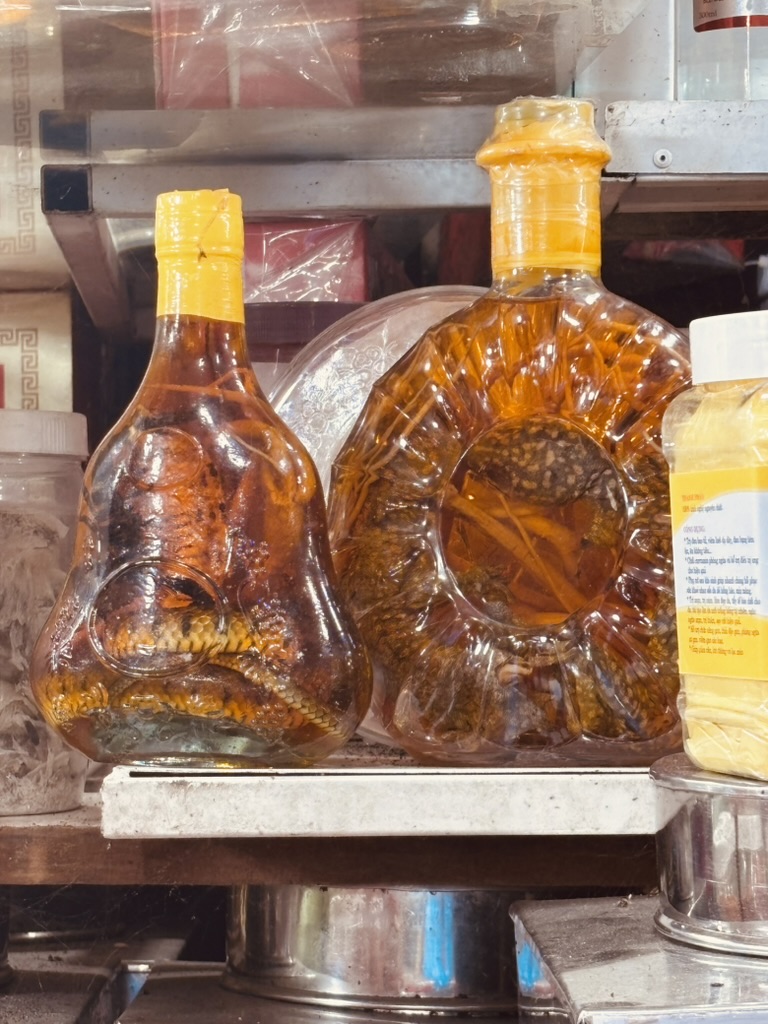
Cobra wine. For strength, apparently. I left it alone — that was my choice. Plenty of people try it and are absolutely fine.
At some point in most Vietnamese markets you encounter the bottles with whole snakes inside — cobras preserved in rice liquor, sold as a medicinal drink. I didn't touch it. I don't drink alcohol and that was a simple decision. But I want to be clear: many people try it, nothing bad happens, it's a genuine cultural thing and not a tourist trap. If that's your kind of curious, go for it.
The seafood
For seafood, Vietnam is a paradise. Fresh, cheap, and cooked in front of you on a pavement stall while you sit on a plastic stool. Whole lobster for less than the price of a sandwich at a European airport. I am not over it and I don't expect to be.
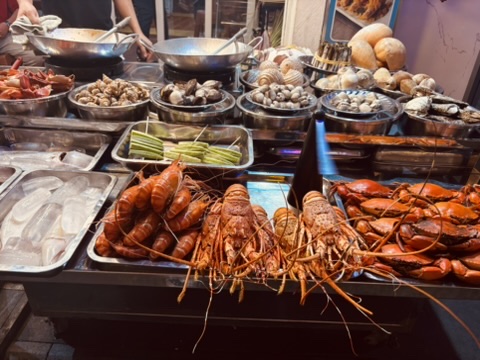
Lobster at a price that made me read the menu twice. Then order twice.
The seafood markets reset your relationship with what luxury is supposed to cost. You point, someone cooks it, you eat it on the street. That's the whole system and it works perfectly.
Can Tho: the reset
If you're struggling financially, or just need to slow down after the noise of HCMC, Can Tho in the Mekong Delta is the answer. It's calm, genuinely affordable, and has the kind of rhythm that lets you breathe. I recommend it without reservation as a base — somewhere to stop moving for a few days and let Vietnam be quiet for a moment.
On the days when the rain made going out pointless, I stayed in with my laptop — not working, but learning things, or writing. I'd been working on my book and those rainy days in Vietnam gave me some good pages. That's the other thing about having a gap between projects: you get your thoughts back.
Three weeks. No job, no plan, bare feet on the pavement. I came back knowing I'd go again.
Getting around Vietnam? 12Go makes it easy.
From city buses to overnight sleeper trains and everything in between, 12Go lets you compare routes, times and prices across Vietnam — and the rest of Southeast Asia — and book your ticket in advance, no guesswork and no language barrier at the station.
Book Transport on 12GoThis is an affiliate link — if you book through it, I may earn a small commission at no extra cost to you.