It was the first time I'd flown with a bicycle. The bike goes in a box — specifically, the kind of large flat box you'd use for a television, which is exactly the shape it was. Add a small trolley to drag, a backpack on my back, and that box under one arm, and you have a picture that looked, objectively, unreliable. I should not have been able to move all of this at once. But everything went smooth — smoother than if I'd planned it, actually. That's sometimes how it goes.
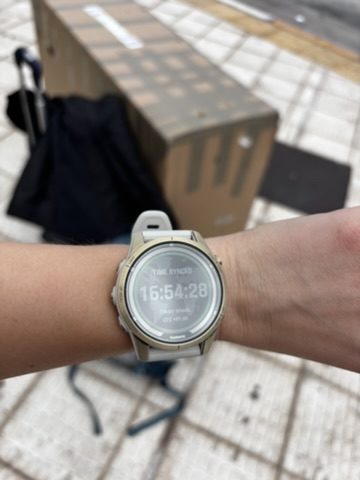
Time synced the moment I landed. Things have a way of aligning when you're living freely. I've noticed this a lot since I started travelling.
Everyone I passed jumped to help with the box. At one point the whole traffic stopped — my bike had ended up on the wrong side of a bus, completely blocking the road — and people got out of their cars to sort it out. Strangers, just helping, no drama. That was the welcome to Tenerife.
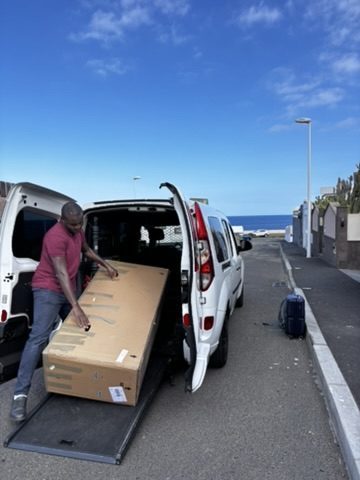
All over the place, people just jumping to help. Tenerife started well.
The elevator situation
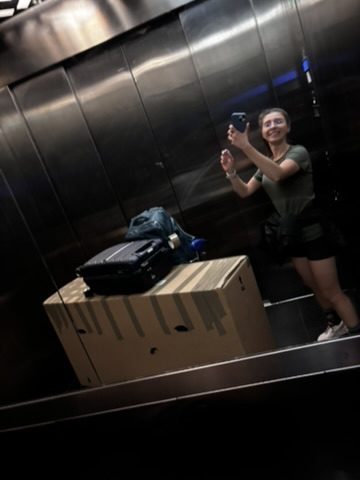
The elevator. The box. The trolley. The will to live. Feeling strong.
Getting everything into a hostel elevator — alone, after a flight, with a television-sized box — is the kind of problem that builds character. I got it in on the third attempt. The door closed. I stood there surrounded by my own luggage feeling extremely competent.
Hostel life with a bike
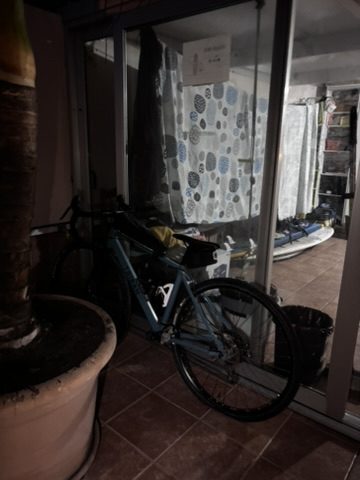
Hostel life, bike edition. It got the best spot in the room.
The hostel was genuinely comfortable — the kind of place that makes you think about volunteering so you can stay longer. I reassembled the bike in the courtyard and felt that specific excitement of having a bicycle somewhere new. I also started to figure out something about Tenerife that I hadn't fully understood from the outside.
The car
Tenerife is not a great island for cycling if you don't have a car. The distances between areas are large, the terrain is serious, and the road network doesn't lend itself to point-to-point touring the way some islands do. I'd arrived imagining I'd ride everywhere. The reality was that I rented a car and used it as a base — drove to a location, unloaded the bike, rode a section, loaded it back, drove to the next place.
It worked well, actually. Better than fighting the logistics of getting from the south to the north by bike when the only direct route is a motorway. I tried the pure cycling approach a couple of times — including an attempt towards Anaga park in the north, which would need a proper mountain bike and a much higher tolerance for gravel paths than I had that day.
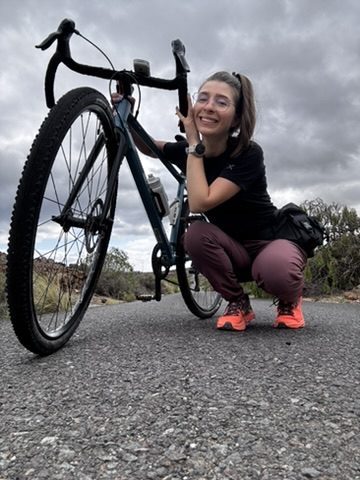
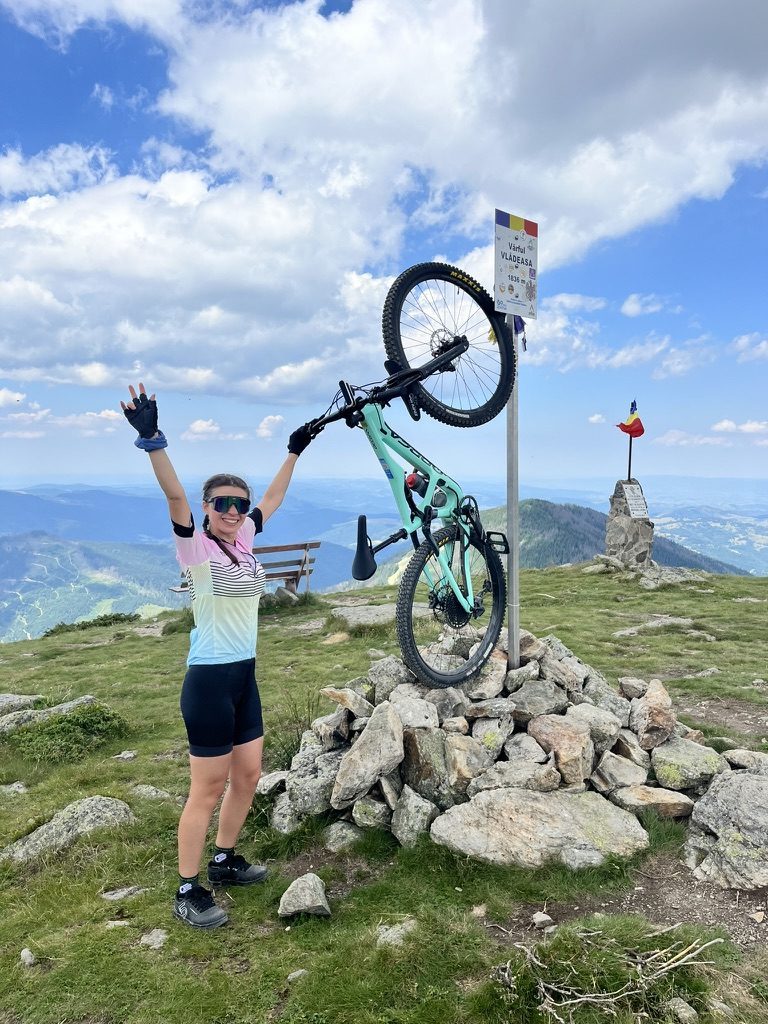
Happy with her, on the road. The car-plus-bike system worked better than expected.
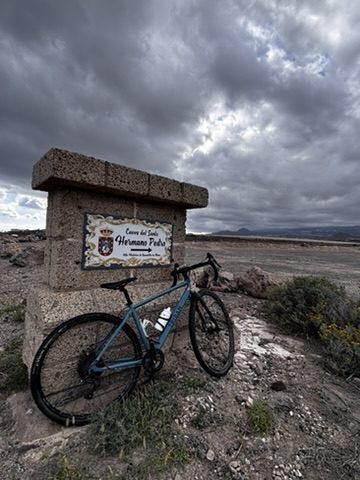
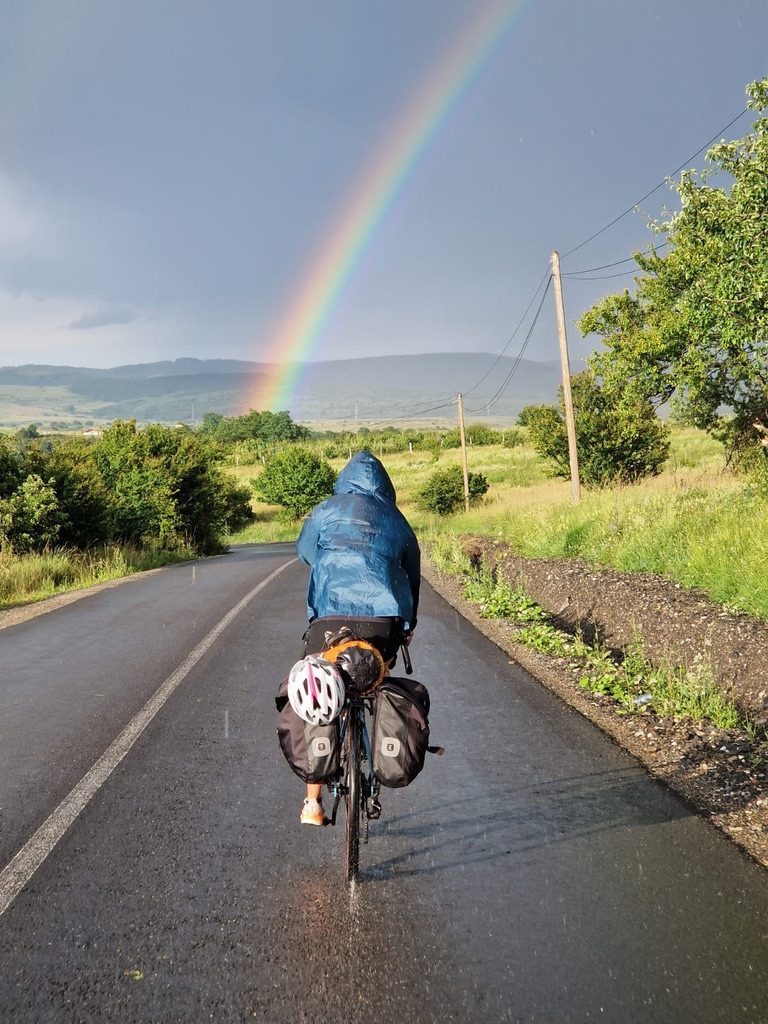
The interior roads. Empty, smooth, dramatic. A different planet from the tourist coast.
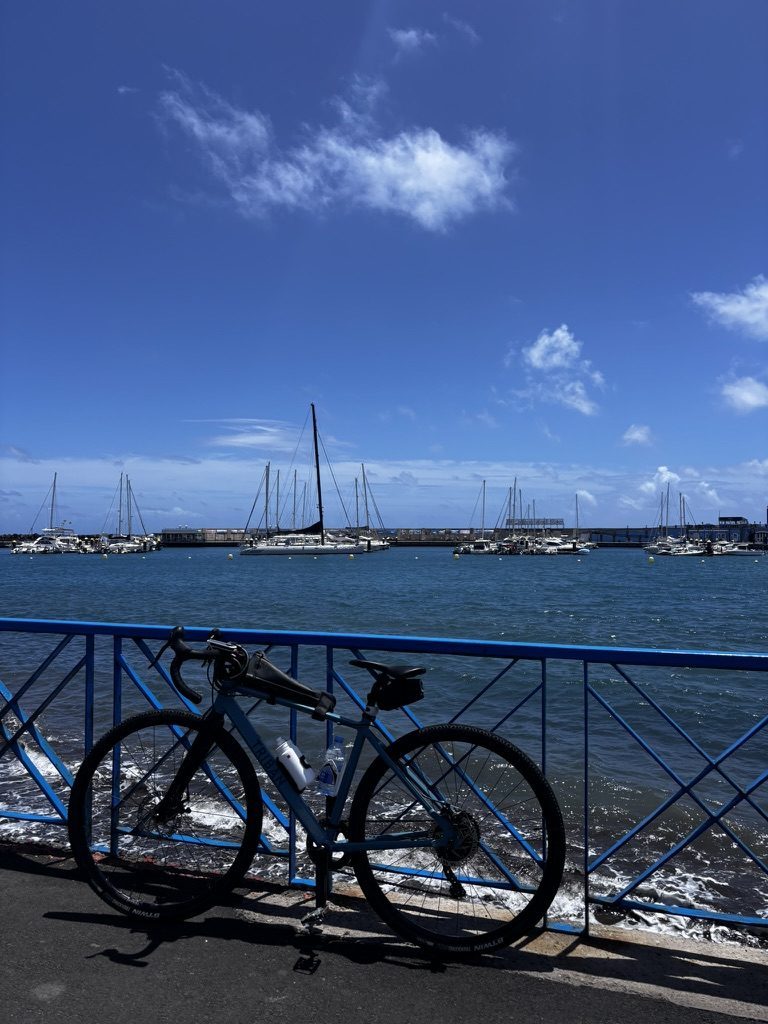
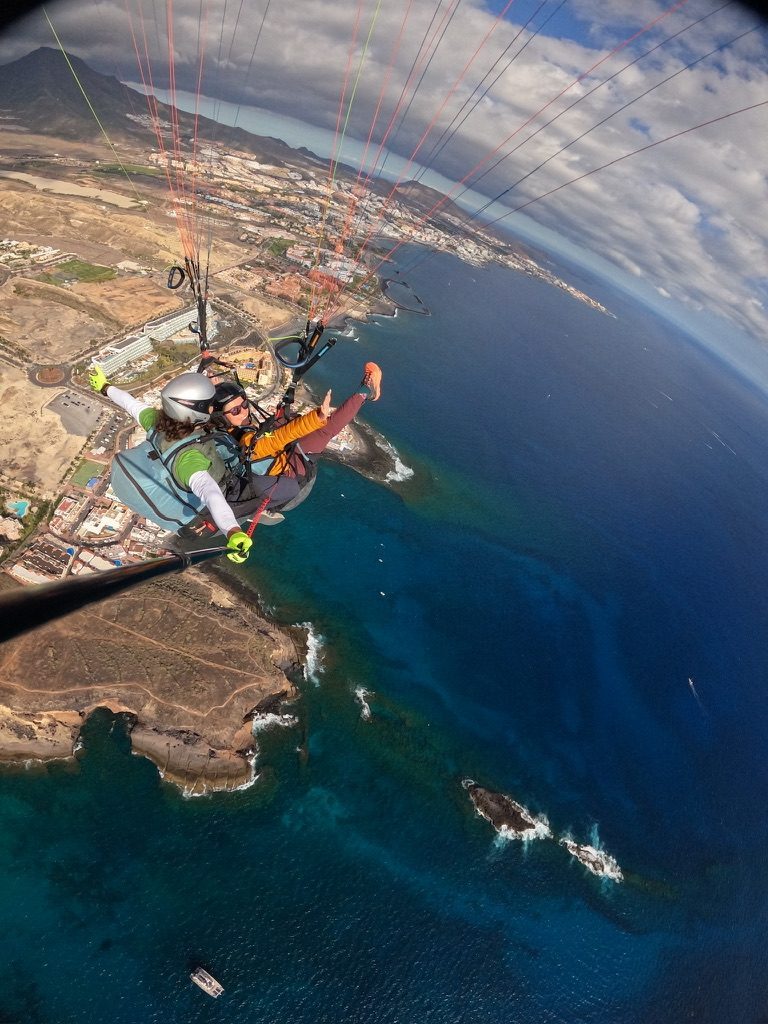
The coastal route. The sea is always there when you look left.
The bushes
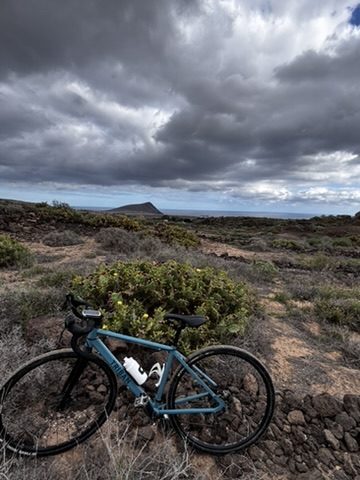
Avoiding the highway. Found the bushes instead. This was not the plan.
On one of the days I tried to cycle a section that turned out to have no practical alternative to the motorway — and bikes aren't allowed on motorways. The workaround was a dirt track that turned into increasingly dense scrub. At one point the bike and I were entirely inside a bush, working out the geometry of extracting both of us. This is the part that doesn't make it into the photos. I got out. Scratch on my arm. Forgotten by lunch.
The guilty stop
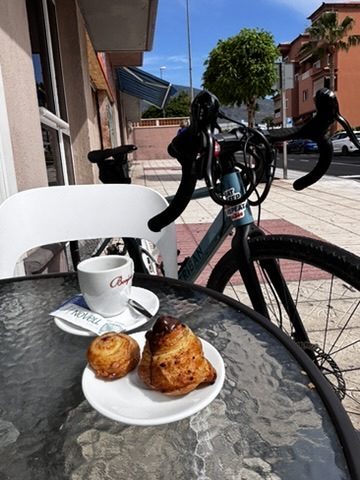
The short guilty stop. I was supposed to be riding. I was having coffee. These things are not incompatible.
Every ride has one stop you didn't plan that you feel mildly guilty about. You find a café with a view. You stay longer than you meant to. You get back on the bike slightly better than you got off it. The guilty stop is not a failure of discipline. It's the ride doing what it's supposed to do.
The bike's new owner
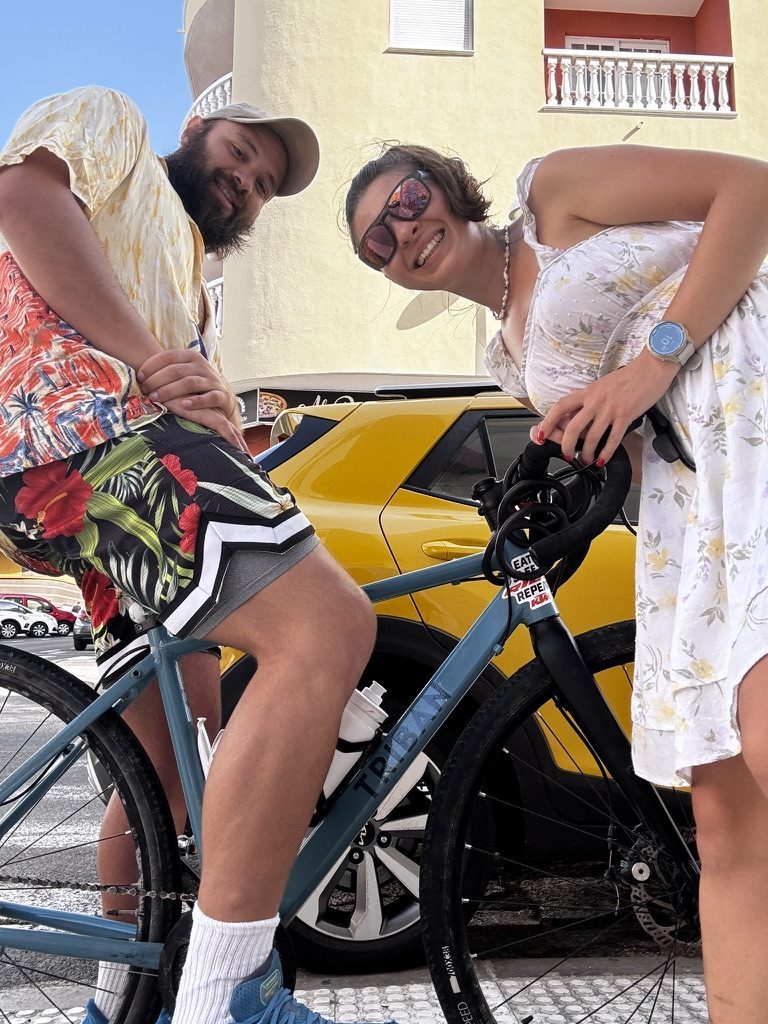
The Argentinian guy who got the bike. The right ending for both of them.
At the end of the trip I gave the bike away. The practical version: it was my first bike, a basic Decathlon road bike that had served its time and was honestly reaching end of life. I couldn't fly with it to Madeira — my next stop — without disassembling it, boxing it, and paying to check it, and the bike wasn't worth the effort anymore.
There was an Argentinian guy at the hostel. I offered him the bike. He checked the gears, adjusted the saddle height — naturally — and rode it in a small circle with a grin that made the whole thing feel exactly right.
The bike stayed on the island. That's a better ending than a storage unit back home.
Touring with a bike? Find a hostel that won't mind.
Not every hostel is set up for a bike in the room, but plenty are if you know to ask. Trivago lets you compare prices across hostels, guesthouses and hotels in Tenerife, so you can sort out where the bike — and you — are sleeping before you land.
Compare Hotels on TrivagoThis is an affiliate link — if you book through it, I may earn a small commission at no extra cost to you.